The phrases used to describe the events of 2020 have now become a little cliché – but there’s no doubt it has been a very challenging year for every individual and every business on a global scale. We’ve come across challenges we’ve never seen before and had to adapt at an incredible pace in order to maintain our strong financial position and support our customers and our employees. …
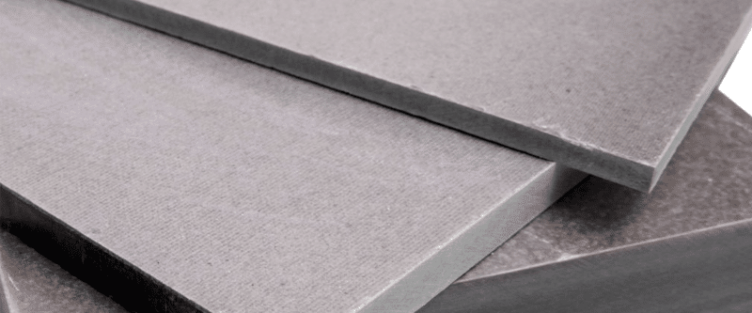
At Elmelin, we continuously strive to find and design solutions that provide better, safer and more effective insulation for our customers’ requirements. One area we are doing more and more work is in developing solutions for batteries, including battery compression pads and particularly the high energy density kind used in applications such as electric vehicles. …
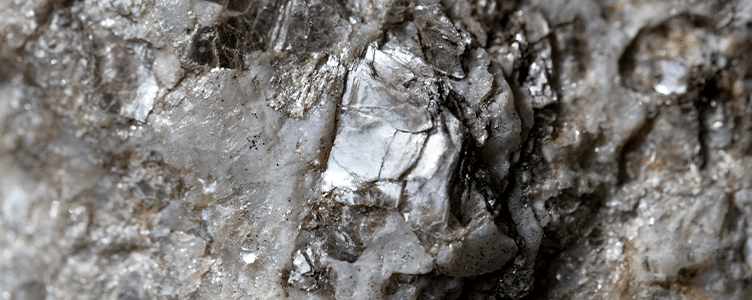
We were incredibly humbled recently to join the annual general meeting of the Responsible Mica Initiative. RMI is a global coalition which was established in 2017, on a foundation of work already done by its members to eliminate child labour and poor working conditions in the mica mining industry. …
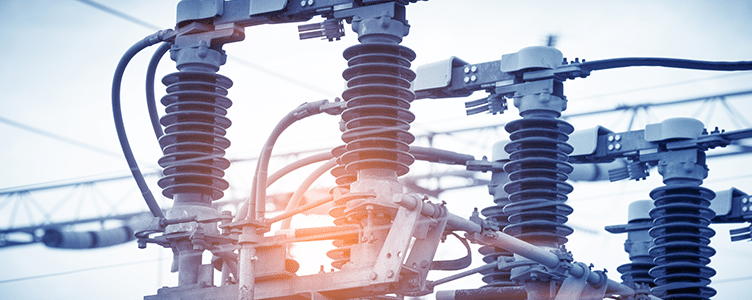
High voltage applications require a specialised and stable material for insulation. High voltages can compromise an entire circuit, as well as the safety of users and/or operators if not properly protected against, hence the necessity of suitable high voltage electrical insulation.
Mica is commonly used in a number of high voltage applications. Let’s take a look at why that is and a couple of examples of how it’s used. …
In order to meet changing customer needs and rising demand for more choice, faster turnaround and better quality, many industries need to constantly look to innovative ways to increase efficiency. For many in manufacturing and similar industries, having effective high temperature thermal insulation for equipment and machinery is key to achieving this. A (relatively) recent innovation in high temperature insulation is microporous technology. …
Mica is highly suited to use as insulation in electrical applications – low, mid or high voltage – because of its superior performance. Mica has a high dielectric strength, able to withstand up to 2000 kV/mm before breaking down. In addition, it also has relatively high permittivity, meaning that it performs well as a dielectric in a capacitor. In terms of its physical properties, mica is highly durable and can also be strengthened by combining and laminating it with glass or ceramic, which is common in electrical applications.
With that in mind, let’s look at some more specific applications in which mica electrical insulation is useful. …
The global foundry and steel industry is massive, 112.7m tons of metal castings are produced globally every year. In Europe alone, 290,000 are employed in the foundry industry.
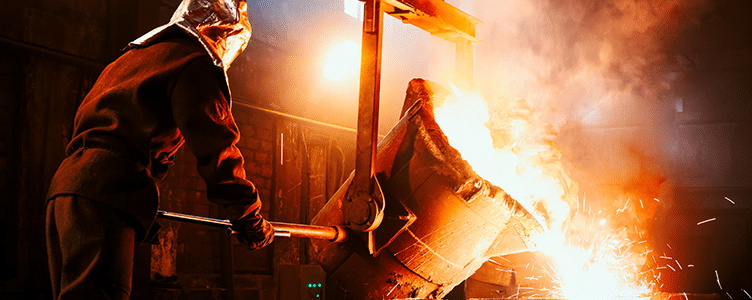
As has been the case in many other industries, foundry and steel has experienced the impact of COVID-19 on production, supply chains and consumer demand. With foundry being one of the sectors we work with most frequently, we wanted to examine the current climate in the industry and the outlook for the coming months. …
At the extreme operating temperatures in the foundry industry, it’s vital that the right insulation and the right insulation material be used to ensure an adequate level of safety, consistency and efficiency. We have been working closely with the foundry industry for many years – and as such have developed a number of highly effective mica-based insulation solutions that can help to increase safety, reduce maintenance costs and increase efficiency by significantly reducing heat loss.
Let’s explore some of the reasons why mica insulation is advantageous in a variety of applications in the foundry industry.…
Our customer is one of the largest integrated producers of alumina and aluminium in Asia, and ranks in the top five aluminium producers in the world. Their low cost but high-quality solutions are used in a wide variety of industries, including automotive, building and construction, defence, electricals, pharmaceuticals and white goods. Their 1182 acre alumina plant, established in 1969, comprises three rotary kilns, two with 3.05m diameter and one with 1.98m. …